


INVESTING FOR RETIREMENT INCOME: CREATING A DISTRIBUTION PLAN FOR YOUR ASSETS
By Chris Ward, CFP® | Founder, EntryPoint Wealth – Cincinnati, Ohio
How an endowment-style approach and dynamic spending plan can help turn a lifetime of savings into sustainable retirement income.
One of the biggest transitions in life occurs when your paycheck stops and your portfolio takes over.
For many retirees in Cincinnati, Northern Kentucky, and throughout the Tri-State region, the biggest financial question is not simply whether they have saved enough. The more practical question is whether they have a plan to turn those savings into a reliable source of retirement income.
As a CERTIFIED FINANCIAL PLANNER™ professional, I often find that investors spend decades building assets but relatively little time deciding how those assets will ultimately support their lifestyle. Accumulating wealth and spending wealth require different strategies.
RETIREMENT INCOME STARTS WITH A PLAN
Before discussing investments, we believe every retiree should begin with three foundational pieces: a retirement plan, a realistic budget, and a distribution strategy.
Your retirement plan identifies your goals, priorities, and future expenses. Your budget estimates the income required to support your desired lifestyle. Once those pieces are in place, the investment portfolio can be structured to help fund those needs.
This distinction matters because investing for retirement income is different from investing only for total return. During your working years, the primary objective may be long-term growth. In retirement, the portfolio must balance income production, growth, taxes, inflation, liquidity, and risk management at the same time.

The objective is no longer simply to build wealth. It is to create a sustainable source of cash flow that may support decades of spending while giving the portfolio a reasonable opportunity to maintain purchasing power.
THINKING LIKE AN ENDOWMENT
At EntryPoint Wealth Management, we often frame retirement income planning through an endowment-style approach. This means viewing the entire portfolio as a potential source of retirement cash flow rather than limiting income to dividends and bond interest.
Stocks may provide dividends and long-term appreciation. Bonds may generate interest and help stabilize the portfolio. Cash reserves can support near-term spending. When coordinated properly, these assets work together instead of competing with one another.
A simple way to understand this approach is to think about a farm.
Imagine that a farmer owns 500 acres of productive land. The property may increase in value over time, but the owner does not need to sell acreage every year to pay the bills. Instead, the land produces a harvest. That annual yield supports the farmer while the underlying asset remains available to produce again in the future.
A well-constructed retirement portfolio can function in a similar way. The goal is not necessarily to live only from dividends or interest. The goal is to create a sustainable harvest from the entire portfolio.
Planning guideline: For many EPWM clients, we expect portfolio distributions to fall in the range of approximately 4% to 5% of portfolio value over time. The appropriate amount depends on each client’s age, goals, time horizon, tax situation, spending needs, market environment, and risk tolerance.
THE IMPORTANCE OF DYNAMIC SPENDING
One of the biggest mistakes retirees can make is assuming that spending will remain exactly the same every year. Retirement spending is rarely that predictable.
Monthly living costs may remain relatively stable, but larger discretionary expenses tend to arrive in waves. A major home repair, an expensive vacation, a new vehicle, a family gift, or an unexpected healthcare cost can quickly change the amount needed from the portfolio.
This is why we often use a dynamic spending approach. The portfolio is designed to provide the baseline income needed for ongoing living expenses. Then, when markets have been favorable and the portfolio has experienced meaningful growth, clients may have additional flexibility to fund larger one-time purchases.
Instead of permanently increasing spending after one strong market year, a retiree can selectively use a portion of portfolio growth for specific goals. This creates a framework that balances current enjoyment with long-term sustainability.
Put simply, the portfolio can support both your regular paycheck and your occasional bonus.
COORDINATING THE ENTIRE RETIREMENT PICTURE
Successful retirement income planning involves more than selecting investments. A useful distribution plan coordinates investment management, taxes, Social Security, cash reserves, estate planning, and risk management.
The source of each withdrawal matters. Taking money from a taxable account, a traditional IRA, or a Roth IRA can produce different tax results. The order and timing of withdrawals may also affect Medicare premiums, Required Minimum Distributions, and the amount of Social Security subject to tax.
A Cincinnati or Northern Kentucky retirement income plan should therefore be built around the household, not around a collection of individual accounts. The goal is to make each account serve a clear purpose within the broader plan.
QUESTIONS YOUR DISTRIBUTION PLAN SHOULD ANSWER
- How much can you reasonably spend each year?
- Which accounts should fund my regular income?
- How will Social Security and taxes affect my cash flow?
- How much liquidity should I maintain for unexpected expenses?
- When can portfolio growth be used for travel, vehicles, or major home projects?
- How will the plan adjust during difficult market environments?
THE BOTTOM LINE
Creating retirement income is not about chasing the highest yield or finding the latest investment trend. It requires a thoughtful strategy that balances cash flow, growth potential, taxes, liquidity, and risk.
For many retirees, an endowment-style approach that treats the entire portfolio as a source of retirement cash flow can provide a practical framework. When combined with dynamic spending, this approach may help clients enjoy the benefits of their financial success while remaining mindful of long-term goals.
For many retirees, an endowment-style approach that treats the entire portfolio as a source of retirement cash flow can provide a practical framework. When combined with dynamic spending, this approach may help clients enjoy the benefits of their financial success while remaining mindful of long-term goals.
For many years, Chris Ward, CFP®, has helped retirees, business owners, and affluent families throughout Cincinnati and Northern Kentucky develop personalized retirement income strategies. By combining comprehensive financial planning, tax-aware distribution planning, and professionally managed income-focused portfolios, Chris continues to help clients create retirement cash flow designed to support both current lifestyle needs and future financial goals. Reach out to Chris or schedule a strategy session to take the next step toward a more resilient financial future.
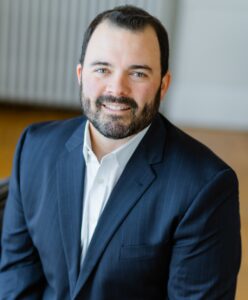
CHRIS WARD, CFP®
Chris has been helping clients as a Financial Advisor since 2007 and established EntryPoint Wealth Management as an opportunity to offer clients access to his best partnership for financial advice. He works as an integrated partner with you and your financial life, to help you better your financial situation and achieve your goals.
CONTACT CHRIS DIRECTLY: