AUGUST 2026 MARKET UPDATE: STRONG EARNINGS, ELEVATED YIELDS, AND ONGOING TRADE UNCERTAINTY
By Chris Ward, CFP® | Founder, EntryPoint Wealth – Cincinnati, Ohio
August showed that markets can rise even when the economy faces challenges. Investors continued to watch oil prices, Federal Reserve decisions, new trade tariffs, and the highest interest rates in decades. Even with those concerns, strong company profits helped major stock indexes move higher.
The key message for investors is simple: uncertainty is normal. Rather than trying to react to every headline, a diversified portfolio built around long-term goals can help investors stay on track. Here is a clear look at what moved markets in August and why it matters.
KEY MARKET AND ECONOMIC DRIVERS IN AUGUST
ECONOMIC DRIVER
WHAT HAPPENED
WHY IT MATTERS
U.S. stocks
S&P 500 +2.6%; Nasdaq +3.9%; Dow +1.3% in August.
Major stock indexes rose, supported by strong company profits.
Market swings
The VIX ended August at 16, down from a high of 21 in July.
Investors were less worried about sharp short-term market moves.
International stocks
Developed markets +1.8%; emerging markets +3.2%.
Gains were not limited to the United States.
Interest rates and bonds
30-year Treasury yield: 5.24%; 10-year: 4.75%; U.S. bonds: +0.4%.
Higher yields can create more income, but rising rates can lower existing bond prices.
Oil
Brent: $90.68 per barrel; WTI: $86.27.
Higher energy costs can affect inflation and business expenses.
Dollar and metals
Dollar Index: 99.43; gold: $4,437.38; silver: $66.58.
A weaker dollar can support internationally priced assets such as gold.
U.S. STOCKS
What Happened: S&P 500 +2.6%; Nasdaq +3.9%; Dow +1.3% in August.
Why It Matters: Major stock indexes rose, supported by strong company profits.
MARKET SWINGS
What Happened: The VIX ended August at 16, down from a high of 21 in July.
Why It Matters: Investors were less worried about sharp short-term market moves.
INTERNATIONAL STOCKS
What Happened: Developed markets +1.8%; emerging markets +3.2%.
Why It Matters: Gains were not limited to the United States.
INTEREST RATES AND BONDS
What Happened: 30-year Treasury yield: 5.24%; 10-year: 4.75%; U.S. bonds: +0.4%.
Why It Matters: Higher yields can create more income, but rising rates can lower existing bond prices.
OIL
What Happened: Brent: $90.68 per barrel; WTI: $86.27.
Why It Matters: Higher energy costs can affect inflation and business expenses.
DOLLARS AND METALS
What Happened: Dollar Index: 99.43; gold: $4,437.38; silver: $66.58.
Why It Matters: A weaker dollar can support internationally priced assets such as gold.
INTEREST RATES REMAIN NEAR LONG-TERM HIGHS
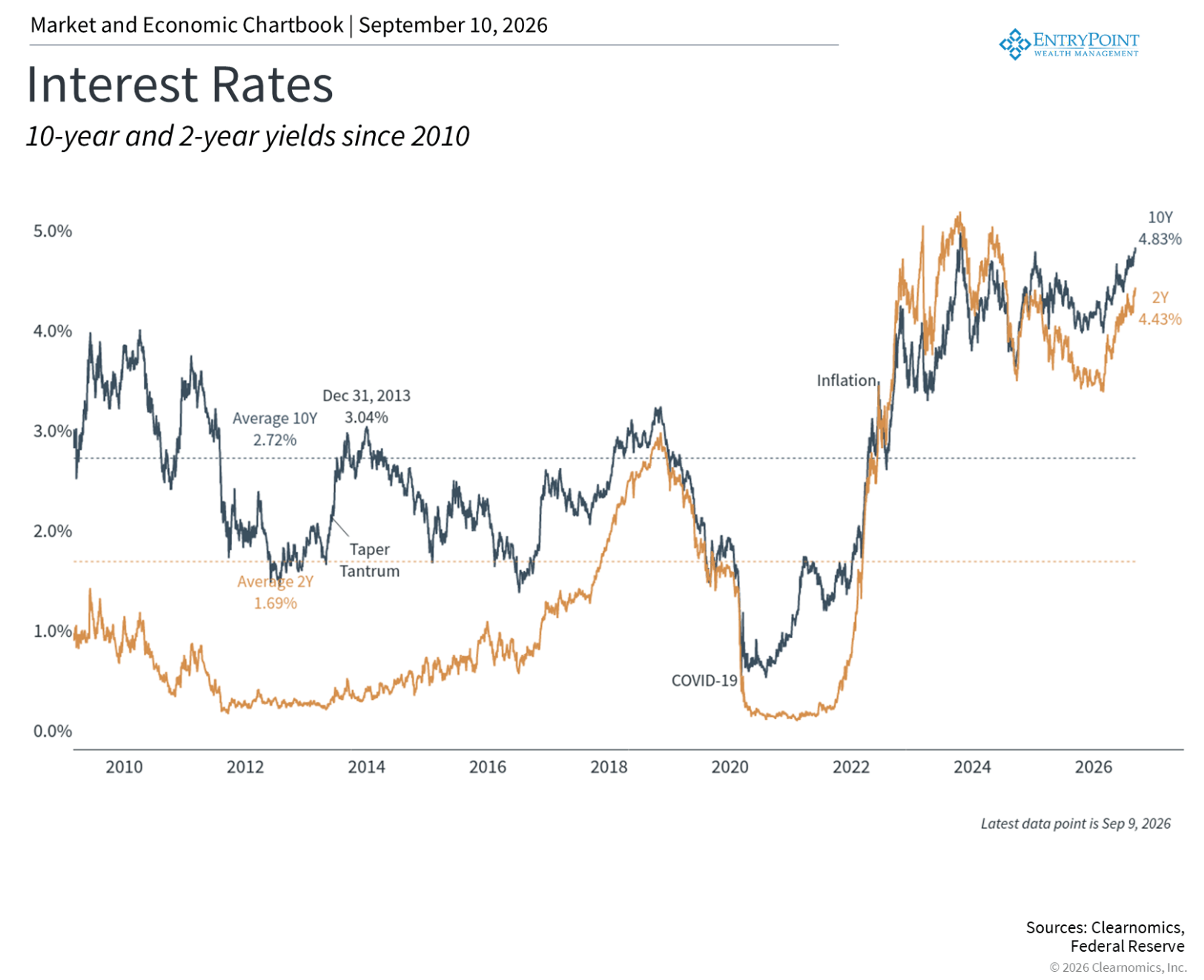
Interest rates stayed higher than many investors expected. The 30-year Treasury yield briefly moved above 5.3% in August, its highest level in nearly 20 years. The 10-year Treasury yield remained near 4.8%. [1] These rates affect borrowing costs, bond prices, and the value investors place on stocks.
Higher rates can slow the economy, but the reason they are rising matters. Inflation drove much of the increase in recent years. More recently, investors have also demanded higher returns after inflation. This can reflect confidence that the economy and company profits will continue to grow. That helps explain how both stock prices and interest rates can remain high at the same time.
For long-term investors, higher rates can create better income opportunities in bonds. However, when rates rise, the prices of existing bonds often fall. This is one reason the Bloomberg U.S. Aggregate Bond Index has been roughly flat this year. The right bond mix depends on an investor’s goals, time horizon, and need for income.
Inflation is still higher than the Federal Reserve would like. In July, the Fed’s preferred inflation measure was 3.7% compared with a year earlier. The version that removes food and energy was 3.3%. Both were above the Fed’s 2% goal. [2] At the Fed’s August meeting in Jackson Hole, Chair Kevin Warsh suggested that another rate increase could come sooner than expected. Markets now expect at least one increase this year, with a second possible by early next year. [3]
COMPANY PROFITS ARE GROWING ACROSS MOST SECTORS
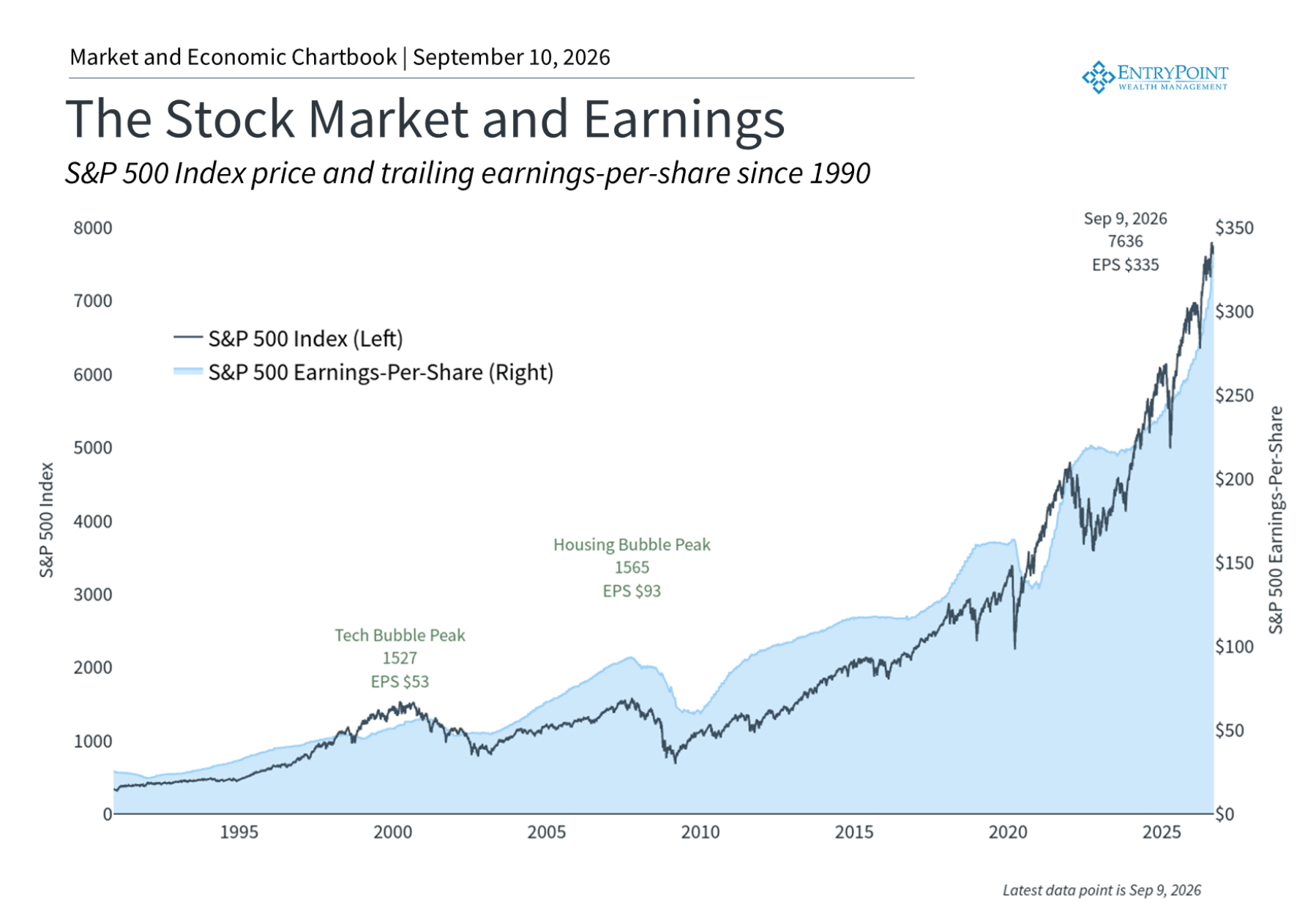
The S&P 500 reached new highs in August, largely because company profits were stronger than expected. Current estimates call for S&P 500 companies to earn a combined $349 per share this year. Forecasts then call for profits to grow 15% in each of the next two years, compared with a long-term average of about 7%. [4]
These forecasts can change, but the growth is coming from more than a few large technology companies. Investment in artificial intelligence, higher oil prices, and growth across many industries are helping. Ten of the eleven S&P 500 sectors reported higher profits than a year ago, and nine posted double-digit growth. [5]
Strong profits have helped support stock prices. The S&P 500 trades at about 20 times expected profits, above its long-term average of 16 times. A price-to-earnings ratio simply compares a stock’s price with the profits a company is expected to produce. It does not predict what markets will do next, but higher valuations make diversification across sectors, investments, and regions especially important.
The Stock Market and Earnings
S&P 500 Index price and trailing earnings-per-share since 1990
THE BOTTOM LINE
August demonstrated the importance of staying balanced and not overreacting to news headlines. Despite periods of volatility, strong corporate earnings and attractive bond yields continue to support long-term portfolios.
Working with a CFP® professional can help you build a diversified portfolio aligned with your goals, risk tolerance, and time horizon—so you can make thoughtful decisions through both strong markets and periods of volatility. At EntryPoint Wealth Management, we help clients put market movements into perspective and stay focused on the long-term financial plan. Reach out to me or schedule a strategy session to take the next step toward a more confident financial future.
REFERENCES
- https://home.treasury.gov/policy-issues/financing-the-government/interest-rate-statistics
- https://www.bea.gov/news/2026/personal-income-and-outlays-july-2026
- https://www.cmegroup.com/markets/interest-rates/cme-fedwatch-tool.html
- Clearnomics research and LSEG data as of August 31, 2026
- https://insight.factset.com/sp-500-earnings-season-update-august-7-2026
- https://www.cbp.gov/trade/programs-administration/trade-remedies/ieepa-duty-refunds
CHRIS WARD, CFP®
Chris has been helping clients as a Financial Advisor since 2007 and established EntryPoint Wealth Management as an opportunity to offer clients access to his best partnership for financial advice. He works as an integrated partner with you and your financial life, to help you better your financial situation and achieve your goals.
CONTACT CHRIS DIRECTLY: