


CINCINNATI TAX PLANNING FOR RETIREES: 2026 STRATEGIES EVERY HIGH-INCOME HOUSEHOLD SHOULD KNOW
By Chris Ward, CFP® | Founder, EntryPoint Wealth – Cincinnati, Ohio
For retirees and high-income professionals, tax planning in 2026 is no longer just about filing efficiently—it’s about making coordinated decisions that impact your long-term financial plan.
Several recent tax law changes are creating both challenges and opportunities. For those with significant assets, multiple income streams, or approaching retirement, the difference between reactive and proactive planning can be substantial.
This is where working with a CFP® professional in your area becomes particularly valuable. As a CFP® based in Cincinnati, I help high-income individuals in Northern Kentucky and Southwest Ohio navigate their specific circumstances as they plan for retirement so they are set up for long-term success.
2026 TAX CHANGES ARE RESHAPING RETIREMENT PLANNING
The current tax environment is shifting in ways that directly impact:
- Retirement account strategy
- Roth conversion planning
- Social Security taxation
- Itemized deductions vs. standard deduction
For high-net-worth retirees, these are not isolated decisions—they are interconnected.
ROTH CONVERSION STRATEGY: WHY IT MATTERS MORE IN 2026
One of the most important shifts in 2026 is how catch-up contributions are treated for higher earners.
If you earn $150,000 or more:
- Catch-up contributions must now be made as Roth (after-tax)
- You lose the ability to reduce current taxable income using pre-tax contributions
This change makes the Roth conversion strategy even more relevant.
WHY ROTH PLANNING IS A PRIORITY FOR CINCINNATI RETIREES
For many of our clients, Roth conversions are no longer optional—they are a core part of long-term tax strategy.
Done correctly, Roth conversions can:
- Reduce future Required Minimum Distributions (RMDs)
- Lower lifetime tax liability
- Improve tax efficiency for heirs
- Help manage Medicare-related income thresholds
However, timing is everything.
Executing a Roth conversion without considering:
- Current tax brackets
- Social Security taxation
- IRMAA thresholds
- Future income expectations
…can create unintended consequences.
That’s why the Roth conversion strategy should always be coordinated within a multi-year financial plan, not executed in isolation.
OHIO VS. KENTUCKY: THE IMPORTANT DISTINCTION FOR CINCINNATI RETIREES
Because many of our clients live, work, or own property across Ohio and Kentucky, understanding the difference in state tax arbitrage matters.
In Ohio, retirement income is generally taxed at a flat 2.75% rate (for 2026 and currently expected going forward). This relatively low rate creates planning flexibility, particularly when compared to higher-tax states.
In Kentucky, retirees benefit from a retirement income exclusion.
- Up to $31,000 (single filers)
- Up to $62,000 (married filing jointly)
This applies to many common retirement income sources, including pensions and certain IRA distributions.

SALT DEDUCTION CHANGES: A PLANNING OPPORTUNITY (FOR NOW)
Another major development impacting tax planning is the increase in the State and Local Tax (SALT) deduction.
For 2026:
- SALT deduction limit increases to $40,400
- Scheduled to revert to $10,000 in 2030
While Ohio is not traditionally considered a high-tax state, many Cincinnati-area households still benefit—especially those with:
- Higher property tax exposure
- Business ownership or pass-through income
- Multi-state income considerations
WHAT THIS MEANS FOR RETIREES
For many, this creates a renewed opportunity to itemize deductions.
Strategies may include:
- Bunching charitable contributions
- Timing deductible expenses
- Coordinating tax payments across years
This is a temporary window, which makes planning even more important.
SOCIAL SECURITY TAXATION: THE HIDDEN LAYER OF COMPLEXITY
One of the most overlooked aspects of retirement tax planning is how income decisions affect Social Security.
The thresholds that determine taxation of benefits have remained largely unchanged—meaning more retirees are exposed to higher effective tax rates.
KEY ISSUE:
Increasing income (even strategically) can cause more of your Social Security benefits to become taxable.
This is particularly relevant when layering:
- Roth conversions
- Required Minimum Distributions
- Capital gains
For retirees, this creates a need for careful income coordination year-by-year.
A CFP® PERSPECTIVE: WHY TAX PLANNING MUST BE MULTI-YEAR
The biggest mistake high-income retirees make is treating tax planning as an annual exercise.
In reality, the most effective strategies we implement for our clients in Cincinnati are built across multiple years.
This includes:
- Managing income across tax brackets
- Strategically executing Roth conversions
- Leveraging temporary deduction opportunities
- Minimizing Medicare-related premium increases
Tax law changes—like those in 2026—don’t just create complexity.
They create leverage for those who plan ahead.
COMMON TAX PLANNING MISTAKES RETIREES SHOULD AVOID
Even sophisticated investors can overlook key planning opportunities.
The most common mistakes include:
- Executing Roth conversions without a long-term strategy
- Ignoring IRMAA and Medicare premium impacts
- Failing to revisit itemization strategies after SALT changes
- Making decisions based solely on current-year tax savings
Each of these can erode long-term efficiency—even if they seem beneficial in the short term.
THE BOTTOM LINE: TAX PLANNING IS A STRATEGIC ADVANTAGE
For retirees and high-income households, the 2026 tax law changes reinforces a simple principle: It’s not what you earn—it’s what you keep after taxes that matters.
The most effective financial plans integrate:
- Tax strategy
- Investment management
- Retirement income planning
When those elements are aligned, tax law changes become opportunities—not obstacles.
WORK WITH A CFP® IN CINCINNATI ON TAX & ROTH STRATEGIES
If you’re evaluating:
- Roth conversion strategies
- Retirement income planning
- Tax-efficient withdrawal strategies
Working with a CFP® professional can help ensure your decisions are aligned with your broader financial goals. As a Cincinnati-based CFP®, I have helped many high-income individuals in the Greater Cincinnati area—as well as clients across the country—build a path toward their ideal retirement. Reach out to me or schedule a strategy session to take the next step towards a better financial future.
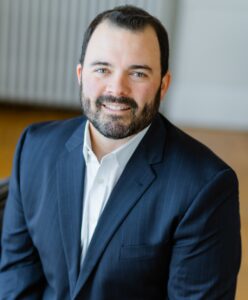
CHRIS WARD, CFP®
Chris has been helping clients as a Financial Advisor since 2007 and established EntryPoint Wealth Management as an opportunity to offer clients access to his best partnership for financial advice. He works as an integrated partner with you and your financial life, to help you better your financial situation and achieve your goals.
CONTACT CHRIS DIRECTLY: